
Can Binocular Vision Dysfunction Cause Anxiety and Panic While Driving?


Driving requires your eyes and brain to work together constantly. You are judging distance, tracking moving cars, scanning mirrors, changing focus, and reacting to movement around you.
For someone with binocular vision dysfunction (BVD), this can become exhausting and overwhelming.
What Is BVD?
Binocular vision dysfunction occurs when the two eyes do not work together comfortably as a team. Even a small horizontal, vertical, or rotational misalignment can force the brain to work harder to keep vision clear and single.
This can lead to symptoms such as:
Dizziness
Headaches or migraines
Eye strain
Blurred or double vision
Motion sickness
Poor depth perception
Visual overwhelm
Anxiety in visually busy environments
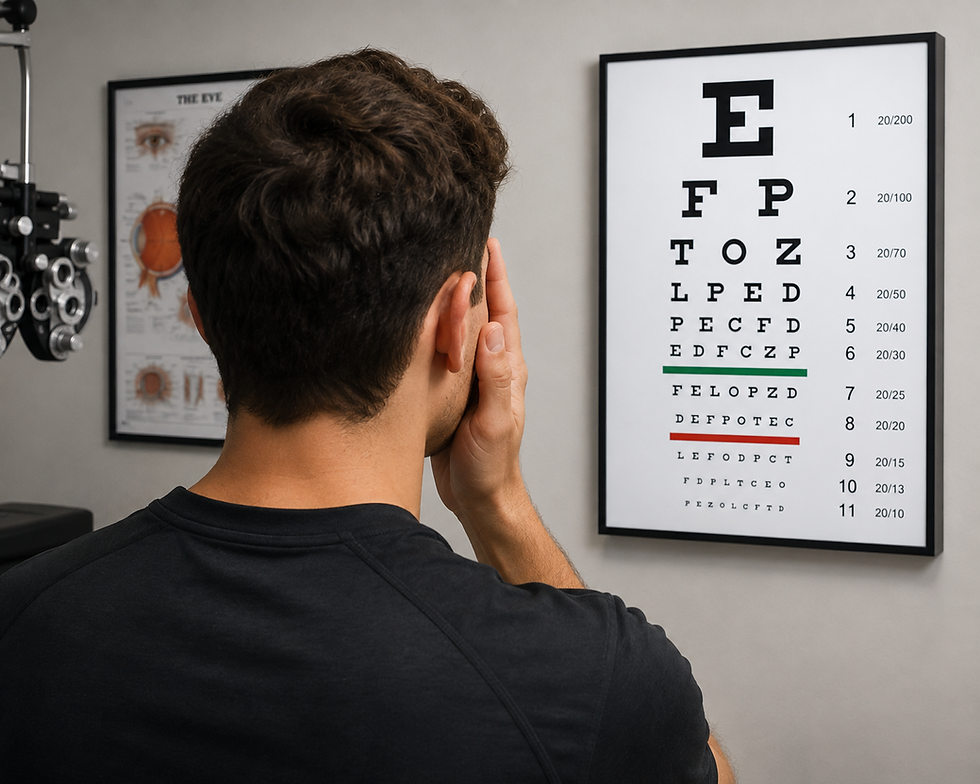
Some people have these symptoms for years despite being told they have 20/20 vision.
Why Can Driving Trigger Symptoms?
Driving places unusually high demands on the binocular visual system.
Your eyes must constantly shift between the dashboard, mirrors, nearby vehicles, distant traffic, road signs, and objects moving at different speeds.
Research has shown that reduced binocular vision and depth perception can make simulated driving more difficult and increase physical stress during demanding driving situations.
For someone whose eyes are already struggling to stay coordinated, this additional visual demand may contribute to dizziness, disorientation, fatigue, and anxiety behind the wheel.
Can BVD Cause Panic While Driving?
BVD can create symptoms that may feel alarming while driving, such as dizziness, unstable vision, nausea, pressure around the eyes, difficulty judging distance, or feeling overwhelmed by surrounding movement.
Those sensations can increase anxiety, especially when traveling at highway speeds.
This can create a cycle:
Visual stress → dizziness or disorientation → anxiety → increased visual sensitivity → more symptoms.
That is why some patients notice their anxiety is much worse while driving, in traffic, at night, or in visually busy environments.
What Should You Do?
If driving consistently causes anxiety, dizziness, nausea, headaches, visual overwhelm, or difficulty judging distance, consider having your binocular vision evaluated.
A routine eye exam may not include the detailed testing needed to identify these problems.
At Vivid Visions Optometry Inc. in Valencia, California, we perform comprehensive in-office BVD evaluations to assess eye alignment, eye teaming, depth perception, and other binocular vision functions.
If you live too far away to come to our office initially, you can also schedule a virtual consultation. During the consultation, we can review your symptoms, discuss whether BVD testing may be appropriate, and help you look for providers closer to you.
Experiencing driving anxiety or dizziness?
Schedule an in-office BVD evaluation with our clinic, or book a virtual consultation if you need help determining your next step or finding a provider near you.


Comments