
ADHD & BVD: What the latest research shows


ADHD is often thought of as a problem with focus, attention, and behavior. But many children and adults with ADHD may also have an underlying visual issue that makes daily life much harder.
Research has shown strong associations between ADHD and multiple binocular vision dysfunctions, including convergence insufficiency, near heterophoria, accommodative dysfunction, and reduced fusional vergence.[1][2] These visual problems can make reading, schoolwork, and screen use more physically stressful, which may worsen symptoms like poor concentration, losing place, slow reading, and fatigue.
One of the most common findings is convergence insufficiency, which affects how well the eyes turn inward for near tasks. Studies show it occurs more often in children with ADHD than in controls.[1] Accommodative dysfunction is also more common, meaning the focusing system may struggle during sustained near work.[2] Near heterophoria and other binocular abnormalities have also been found at higher rates in ADHD populations.[2]
The relationship appears to go both ways. Visual disorders may increase attention difficulties by forcing the brain to work harder during near tasks, while ADHD-related neurological differences may also affect eye teaming and oculomotor control.[5][6]
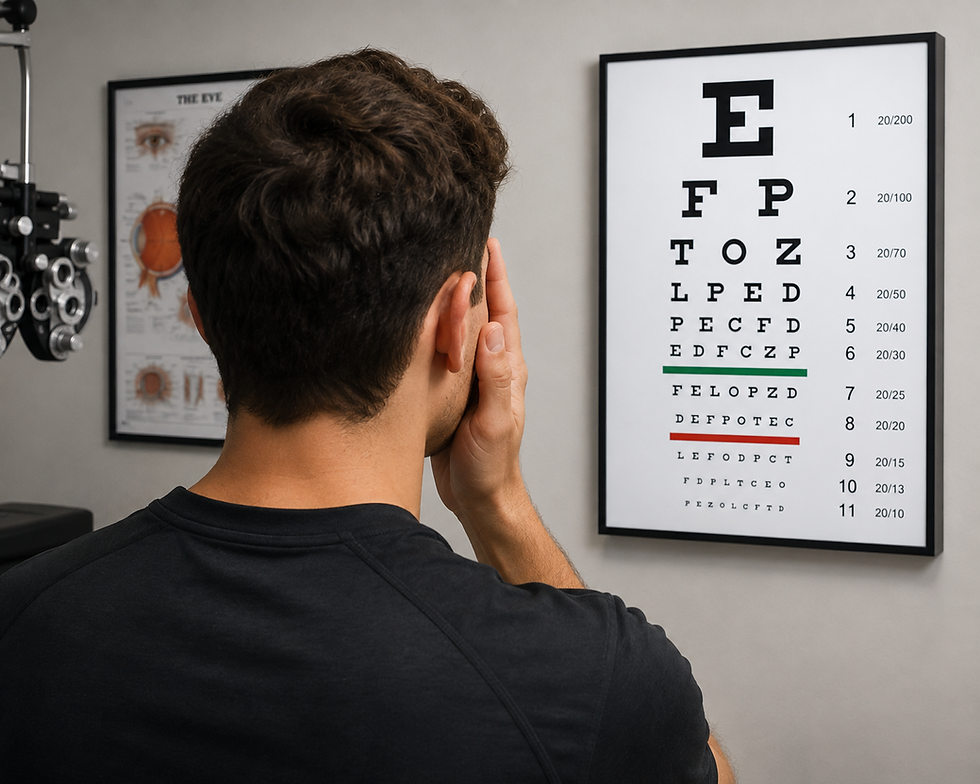
This overlap matters because a person can have 20/20 vision and still have major difficulty with how their eyes work together. A routine vision screening may miss that completely.
Common symptoms of binocular vision dysfunction in patients with ADHD may include:
trouble concentrating while reading
losing place on the page
slow reading
headaches and eye strain
visual fatigue
avoidance of near work
Large population studies have also found higher rates of eye disorders such as strabismus, hyperopia, astigmatism, amblyopia, and heterotropia in children with ADHD.[3][4]
Not every person with ADHD has binocular vision dysfunction. But when symptoms like reading fatigue, poor visual attention, headaches, or trouble sustaining near work are present, a comprehensive binocular vision evaluation may be an important part of the puzzle.
At Vivid Visions Optometry, Inc. in Valencia, California, we specialize in behavioral optometry & prism glasses and evaluate how the eyes work together, not just how clearly they see. We help patients locally and worldwide, and we also offer virtual consultations and virtual vision therapy.
Schedule an appointment here:www.vividvisionsoptometry.com/appointments
References
Clavé L, Torrents A. Convergence Insufficiency Prevalence in Attention Deficit and Hyperactivity Disorder Children Depends on the Diagnosis Criteria. Ophthalmic & Physiological Optics. 2025.
López-Hernández AE, Miquel-López C, García-Medina JJ, García-Ayuso D. Attention-Deficit/Hyperactivity Disorder (ADHD) Is Associated With Near Heterophoria and Accommodative Dysfunction. Vision Research. 2025.
Israeli A, Mezer E. Association Between Eye Disorders and the Development of ADHD/ADD: A Nationwide Retrospective Cohort Study. Eye. 2026.
Ho JD, Sheu JJ, Kao YW, Shia BC, Lin HC. Associations Between Attention-Deficit/Hyperactivity Disorder and Ocular Abnormalities in Children: A Population-Based Study. Ophthalmic Epidemiology. 2020.
Maron DN, Bowe SJ, Spencer-Smith M, et al. Oculomotor Deficits in Attention Deficit Hyperactivity Disorder (ADHD): A Systematic Review and Comprehensive Meta-Analysis. Neuroscience and Biobehavioral Reviews. 2021.
Solé Puig M, Pérez Zapata L, Puigcerver L, et al. Attention-Related Eye Vergence Measured in Children With Attention Deficit Hyperactivity Disorder. PLoS One. 2015.


Comments